
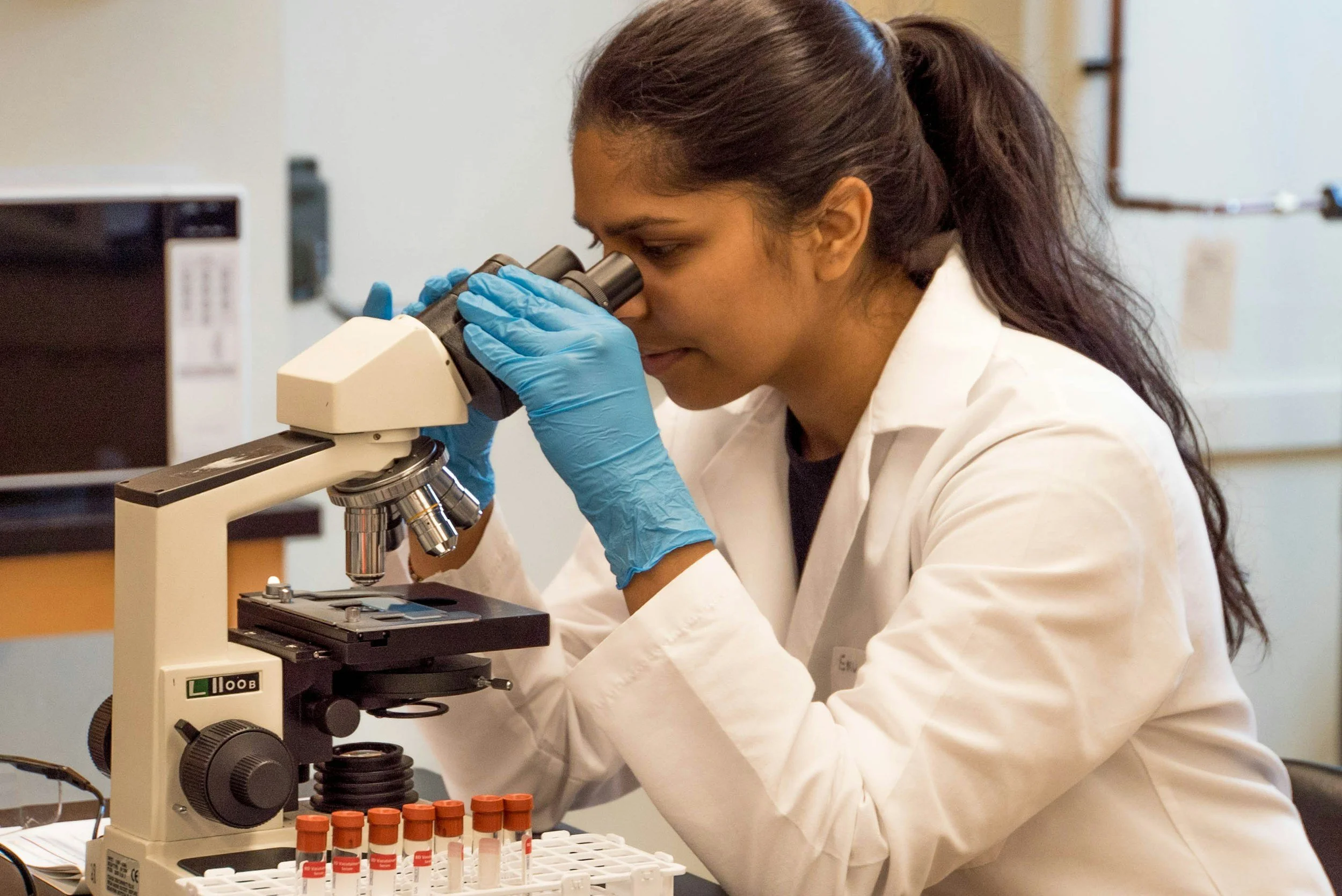
Plymouth Hospitals Charity is supporting groundbreaking research that could help unlock new ways to diagnose and treat serious lung diseases, including mesothelioma.
Thanks to more than £60,000 in charitable funding, a new research project at University Hospitals Plymouth NHS Trust is set to explore how the body’s own immune response could hold vital clues to disease progression.
The study, led by clinicians at Derriford Hospital, will focus on patients who present with pleural effusion – a build-up of fluid around the lungs, which is often the first sign of underlying disease. While samples of this fluid are routinely analysed, they do not always provide clear answers.
This research aims to go further.
Scientists will examine the presence and behaviour of macrophages – cells that form part of the body’s first line of defence. By analysing these cells in fluid samples from patients, the team hopes to better understand their role in diseases such as mesothelioma, lung cancer and metastatic cancers.
Christine Jones, Mesothelioma Specialist Nurse at University Hospitals Plymouth NHS Trust, explained:
“We see many patients who come to us with fluid around the lung as their first presentation. Sometimes we get a diagnosis from that fluid, but often we don’t.
What we’re trying to understand is what’s happening within that fluid – particularly the role of macrophages, which are part of the body’s first line of defence.”
The long-term ambition is significant. If specific patterns or targets can be identified, this could open the door to larger national studies and, ultimately, the development of new treatments designed to target these pathways.
“If we can identify a target, that’s when the next stage begins,” Chris added. “You can take that evidence forward and ask whether new treatments can be developed to act on those pathways. That’s how research grows – step by step.”
This project represents an important first step, what researchers describe as grassroots research, with the potential to contribute to a growing body of national and international work in this field. Collaboration with leading centres across the UK will ensure findings are shared and built upon.
Crucially, this research has been made possible thanks to the generosity of supporters.
The funding is supporting a dedicated PhD post, helping to drive the study forward and build research capacity locally. It also reflects the lasting impact of a legacy gift from a former patient, whose contribution continues to support innovation and improve care for future generations.
“This funding is incredibly important,” said Chris. “It allows us to get this research off the ground and start building the evidence we need. From there, it can grow into something much bigger.”
Mesothelioma remains a significant public health challenge in the UK, with tens of thousands of deaths recorded over recent decades and continued exposure risks still present in everyday environments.
“It’s a disease with a long history, but it hasn’t gone away,” Chris said. “We’re still seeing new cases, often from unexpected sources. That’s why research like this is so vital.”
By investing in research, Plymouth Hospitals Charity is helping clinicians and scientists take meaningful steps towards better outcomes for patients both locally and beyond.